


Cedar Book XVIII: A Working Resource for Architects Designing with Wood
Project-Proven Precedents You Can Actually Spec
Cedar Book XVIII: A Working Resource for Architects Designing with Wood
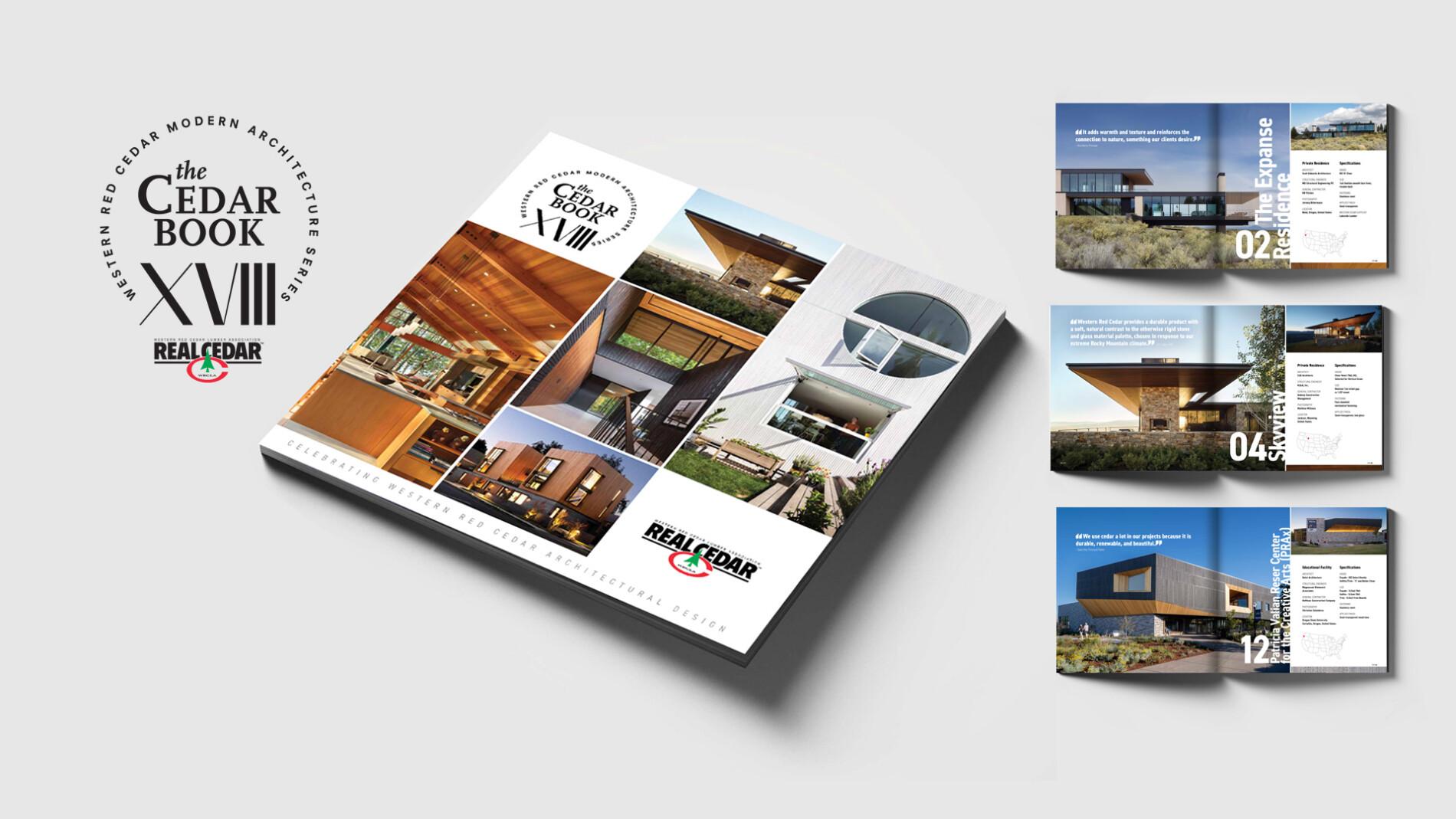
Where can you find wood design inspiration you can trust—plus field-tested detailing strategies—all in one place? Cedar Book XVIII is designed for practicing architects—not as a
coffee-table retrospective, but as a project-driven reference for anyone shaping contemporary buildings with wood in mind.
It’s a curated look at how peer firms are using Real Cedar to solve site challenges: creating stronger connections to nature, meeting environmental goals, building for longevity, and
delivering a material narrative clients immediately understand.
As Rick Berry, Principal at Scott Edwards Architecture, writes in this edition’s foreword: “As pages are turned, you can expect to see innovation, eye-catching applications, and a collective,
and ever evolving, understanding of the material’s importance to the design profession and the resonance of the places we contribute.”
Here are six reasons Cedar Book XVIII belongs in your reference library—and on hand when moving from consultation to construction.
1) Wood design inspiration you can apply today
Cedar Book XVIII is a fast way to see current cedar applications across building types, massing strategies, and façade compositions—without having to stitch together precedent research from
dozens of sources. The projects show Real Cedar used as:
- A primary cladding material and architectural “wrapper”
- A way to articulate entries, soffits, and moments of craft
- An interior finish that extends the material experience inside
- A tool for contrast, rhythm, and legibility in larger envelopes
The result is inspiration that translates directly into early-phase design moves—massing, material palette, and the “story” that helps clients understand the value of wood.
“Cedar Book 18 demonstrates why this warm, resilient wood is repeatedly selected and why its application creates designs that enhance how occupants experience spaces,” explains Berry
before adding, “no single material so quickly establishes such a strong sense of place.”
2) Detail intelligence: finishes, grades, size and profiles
One of the most architect-useful aspects of Cedar Book XVIII is the way it reveals decision-making—how project teams deploy cedar strategically based on visibility, performance,
and design emphasis.
At Oregon State University’s Patricia Valian Reser Center for the Creative Arts (PRAx) – designed by Holst Architecture to house a 500-seat recital hall, a black box theater, a gallery,
and dynamic public and learning spaces – Real Cedar becomes a compositional system. Multiple tones, targeted grade selection, and finish interplay reinforce massing and moments of
focus.
“The team prioritized materials that withstand heavy public use while requiring minimal maintenance,” notes Holst principal Kim Wilson, “ensuring the building remains beautiful and
functional for decades.”
3) Biophilic design made and easy to incorporate
“Biophilia” can become vague unless it’s grounded in material experience. Cedar Book XVIII offers concrete examples of how wood supports wellbeing with an instant connection to
nature—through tone, texture, and continuity across thresholds.
A standout residential example in the book is Ravine House by Orangeink Design, where cedar is used on exterior soffits and most interior ceilings to create continuity between inside and out. Architect Tony Diodati notes: “Cedar creates a warm and welcoming feeling as you approach the house and move through it.” This is biophilia as an architectural decision—material continuity, sensory warmth, and a clearer relationship to landscape.
4) Peer examples for meeting environmental goals
Architects are increasingly asked to defend material choices with performance and environmental logic. Cedar Book XVIII helps by showing how firms align cedar with durability,
renewability, and long-term stewardship—in ways that remain design-forward.
For example, at PRAx, the envelope was designed for high performance, with a focus on renewability as part of the university’s ongoing Carbon Action Plan—while still creating a warm, inviting space for students. Cedar checked all the boxes on this and many other award-winning buildings by Holst. Principal Dave Otte explains: “We use cedar a lot in our projects because it is also durable, renewable, and beautiful.”
5) A client-facing starting point that builds confidence
Clients often respond to cedar immediately—because it communicates warmth, authenticity, and craft in a way few exterior materials can. Cedar Book XVIII gives architects a curated set of
credible precedents to bring into:
- Early programming conversations
- Visioning workshops
- Material palette reviews
- Proposals and interviews
It helps shift the conversation from selling a material to collaborating around outcomes—giving clients clear examples to react to, language to describe what they value, and the confidence to
make decisions earlier and stay aligned throughout the process.
That dynamic shows up in project stories throughout the book. One of the book’s best examples is Skyview by CLB Architects. Featuring a showstopping cedar soffit system, the project
becomes a dialogue between site, material, and the people who brought it to life.
“Our relationship with the homeowner is a huge part of this story,” says Eric Logan FAIA, CLB partner. “Because of the trust and rapport that we built over the years, we were able to
challenge each other and ultimately arrive at a design we all feel proud of.”
6) Professional development: stay current in wood design innovation
Whether you’re already specifying cedar or re-evaluating wood for new project types, Cedar Book XVIII functions as a ready reference for professional development: a way to stay current
on how leading teams are pushing wood design forward—across public, cultural, and residential work—while keeping an eye on performance and sustainability.
Berry points to cedar’s adaptability across contrasting contexts—and that’s one of the edition’s core takeaways: it’s a material that can be contemporary without being cold, and regional without being nostalgic: “The versatility that it offers—appropriate across architectural styles and unconstrained by eras—means that the impact will last long after the building is built.”
Start your next client conversation with stronger material examples. Download the digital edition or order a free hard copy of Cedar Book XVIII to explore the latest in contemporary wood design.