


why cedar
Back
why use western red cedar?
characteristics & properties of western red cedar
benefits of real cedar
real cedar history
real cedar certification
sustainability & the environment
biophilia
forestry facts
why use yellow cedar?
products
Back
siding
Back
introduction
Back
siding home
siding gallery
virtual siding samples
siding installation videos
design & spec
Back
siding grades
engineered cedar
siding calculator
prep & install
Back
preparation
pre-building
tyvek drainwrap
general installation
finish & maintain
Back
choosing a finish
how to finish
care & maintenance
restoration
siding profiles & trim
Back
bevel
trim boards
board & batten
shingle panels
tongue & groove
lap or channel
soffits and entryways
decking
Back
introduction
Back
decking home
decking gallery
virtual decking samples
design & spec
Back
decking grades
decking span charts
span tables
decking calculator
prep & install
Back
fasteners
stairs & railings
finish & maintain
Back
choosing a finish
how to finish
care & maintenance
restoration
deck projects
Back
roof deck
ground level deck
raised deck
uphill sloping lot deck
outdoor
Back
introduction
Back
outdoor home
outdoor gallery
design & spec
Back
diy plans
pre-built kits
design tips
span tables
prep & install
Back
preparation
fasteners
finish & maintain
Back
choosing a finish
how to finish
care & maintenance
restoration
fencing
Back
fencing home
fence construction
fence specifications
pre-built fence panels
indoor
Back
introduction
Back
indoor home
indoor gallery
design & spec
Back
design tips
prep & install
Back
preparation
finish & maintain
Back
how to finish
care & maintenance
indoor projects
Back
saunas
doors & windows
tongue & groove paneling
blinds & shutters
timbers
Back
introduction
Back
timbers home
timbers gallery
virtual timber samples
design & spec
Back
grades & specs
engineered cedar
span tables
prep & install
Back
preparation
installation
finish & maintain
Back
how to finish
care & maintenance
restoration
diy projects
membership
Back
our members
Back
executive members
retailers
partners
tertiary manufacturers
certified cedar distributors
certified cedar distributors – usa
certified cedar distributor – canada
architects
international associates
why become a member?
membership levels
membership benefits
membership faq
join the wrcla!
member support
resources
Back
quick access
Back
real cedar resources
blog
gallery
videos
cedar books
decking calculator
siding calculator
catalogs & how-to guides
Back
north american publications
cedar books
international publications
environmental product declarations
resources & links
Back
western red cedar useful links
frequently asked questions
real cedar glossary
cedar book 18
Fence Construction
Fence Construction
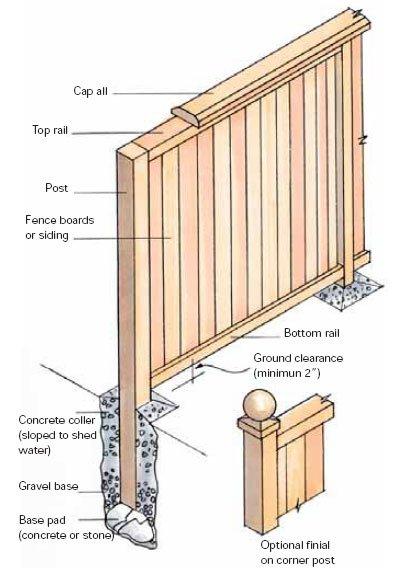
Most fences are constructed with three basic elements: post, rails and infill material. Posts are vertical uprights. Rails run horizontally between, and are supported by the posts. Infill material, most commonly boards, are attached to the rails. For each of these elements there is a size and grade of Western Red Cedar to build just about any style of fence on any budget. Remember, it doesn’t necessarily cost more to have a stylish fence.
Available from our Premium Retailers



Here’s a checklist of points you should consider when planning a fence:
- Choose a style that suits both the purpose of the fence and the landscape, then maintain consistency of style throughout.
- Decide whether you’ll build the fence from scratch or from ready-made fencing sections.
- Select from rough or surfaced material for posts, rails and boards.
- Select solid boards with flat tops or choose from a variety of patterned-top boards such as pointed, dogeared, gothic, spearhead, roundtop and others.
- Decide whether short length pattern siding such as channel or tongue and groove V-joint will achieve the look you want.
- Consider using lattice panels alone or in combination with solid boards where a lighter, more open fence is desired.
- Decide on the type of finish. Transparent or semitransparent stains are suggested if a natural look is desired. Solid color stains are recommended if an opaque finish is desired.
You
Cedar as much as we do?


© 2026 All rights reserved
Next.js Website Development by Bare